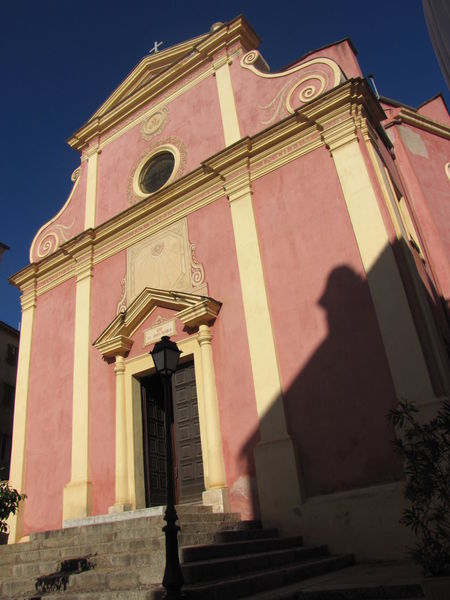
A little history...
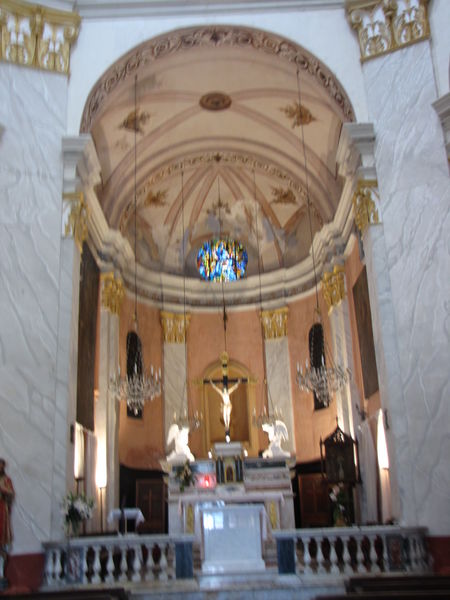
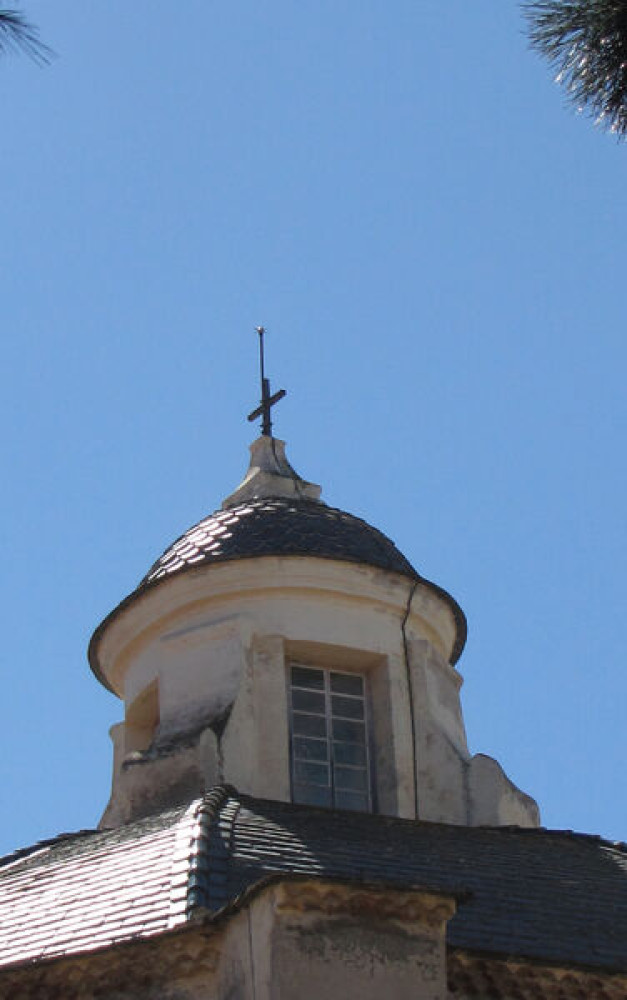
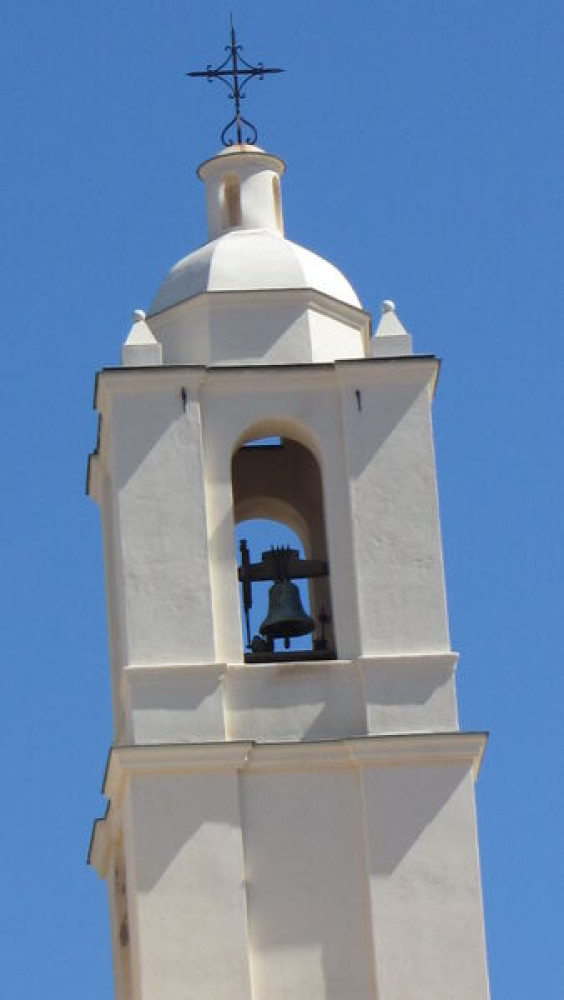
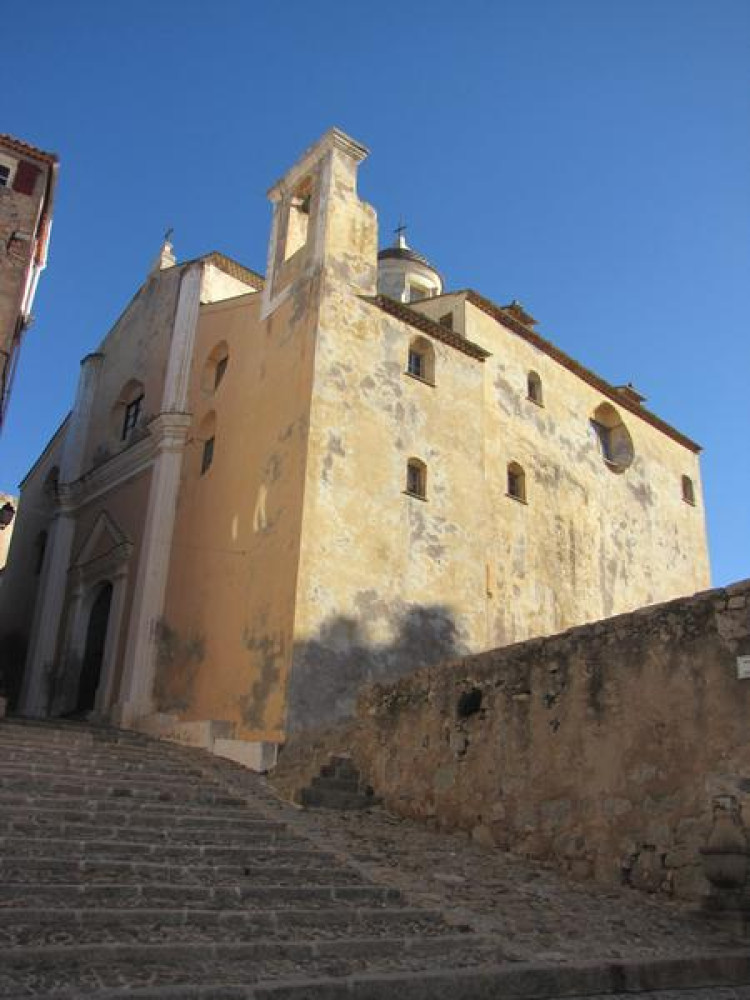
Built from 1774, the church has a central layout and is enhanced by a Neo-Gothic bell tower which was added during the 19th century.
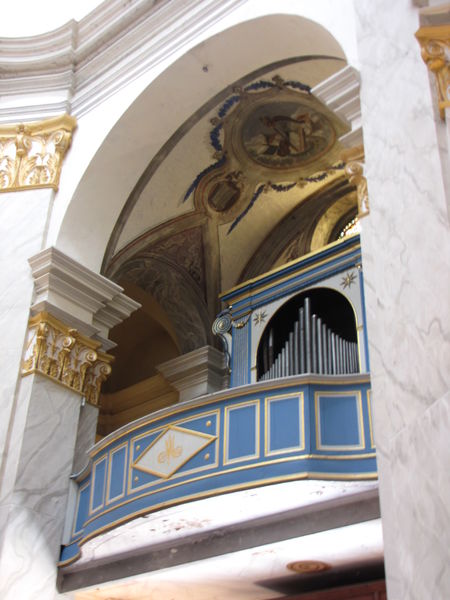
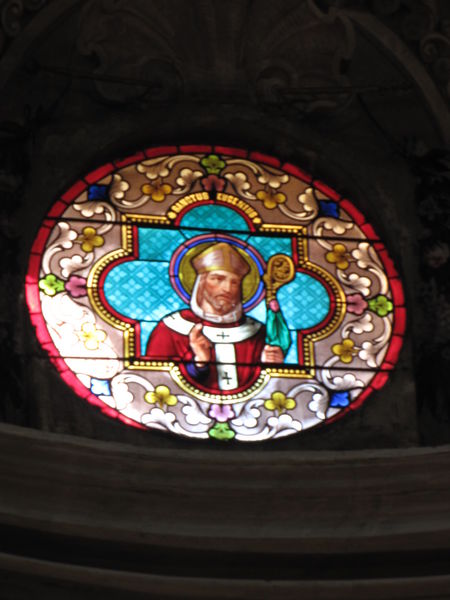
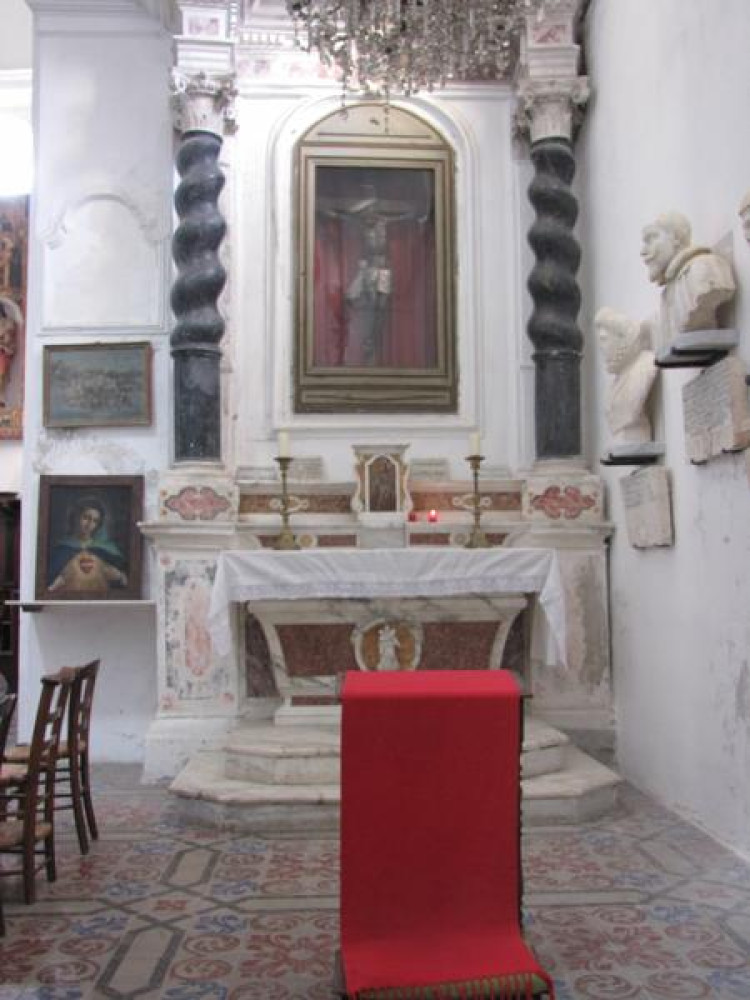
The building was classified in 1988 thanks to the neo-classical decoration of its interior.Four chapels open onto the nave, devoted to St Erasmus, the Immaculate Conception, Our Lady of Mount Carmel and St Anthony of Padua.
An 18th century Annunciation from the collection of Cardinal Fesch and an Assumption between two donors, dated the end of the 16th century and offered by a Calvaise family, adorn the choir.
An Immaculate Conception painted on leather, dating from the 15th century, refers us to a very ancient devotion, testimony of a cult of the Virgin very present in Calvi.



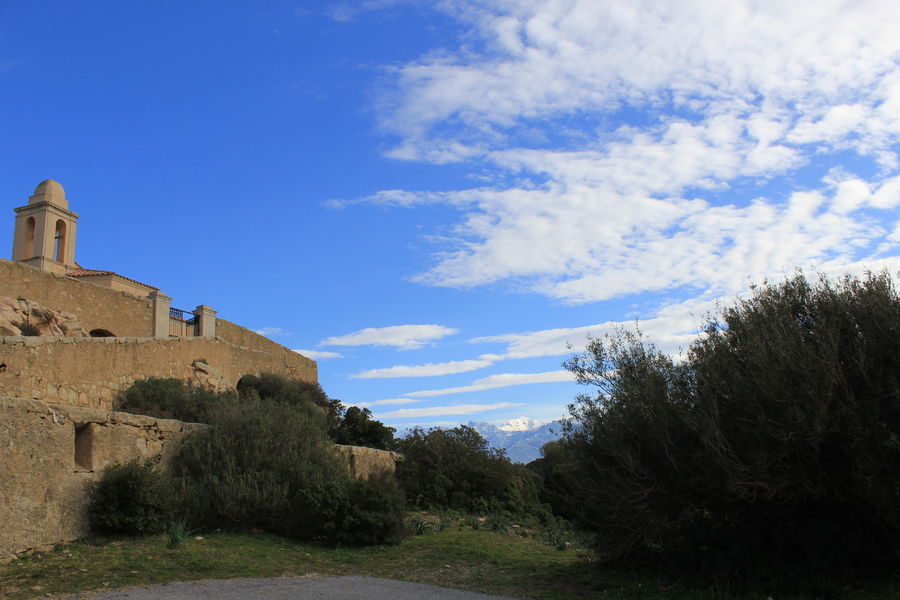
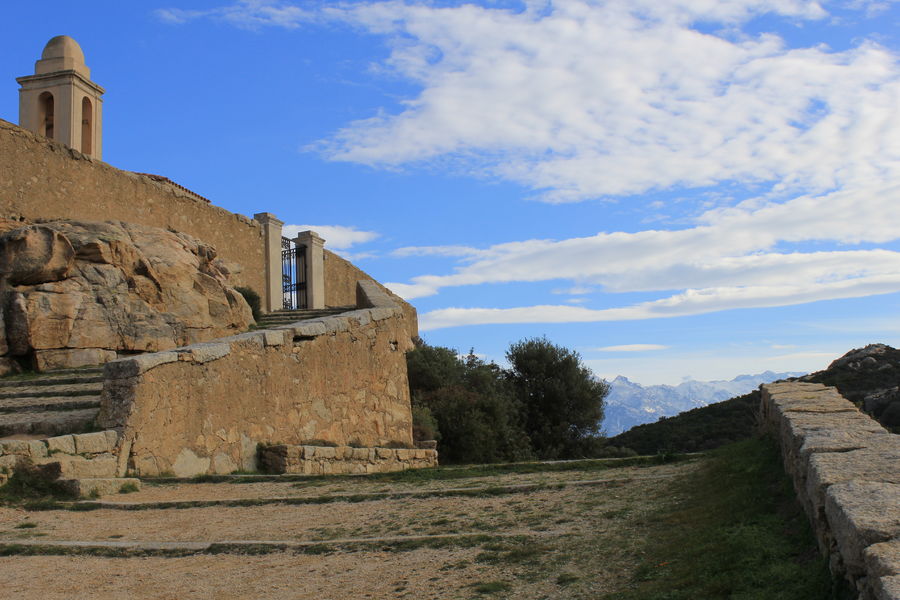
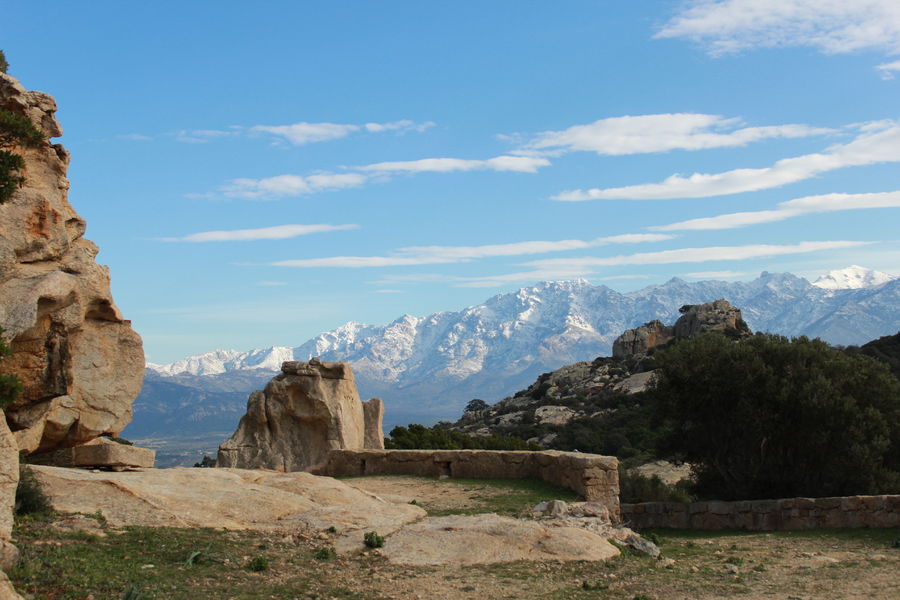
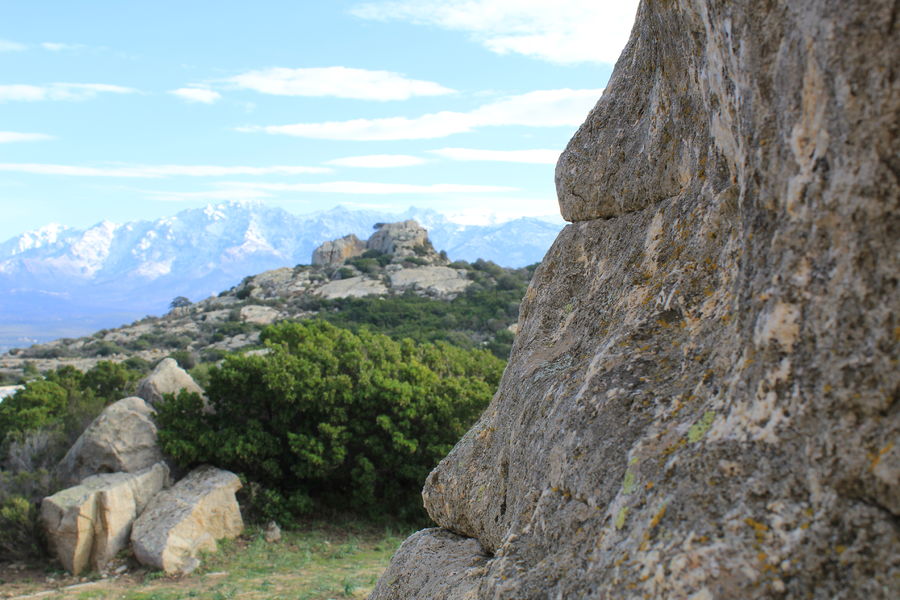
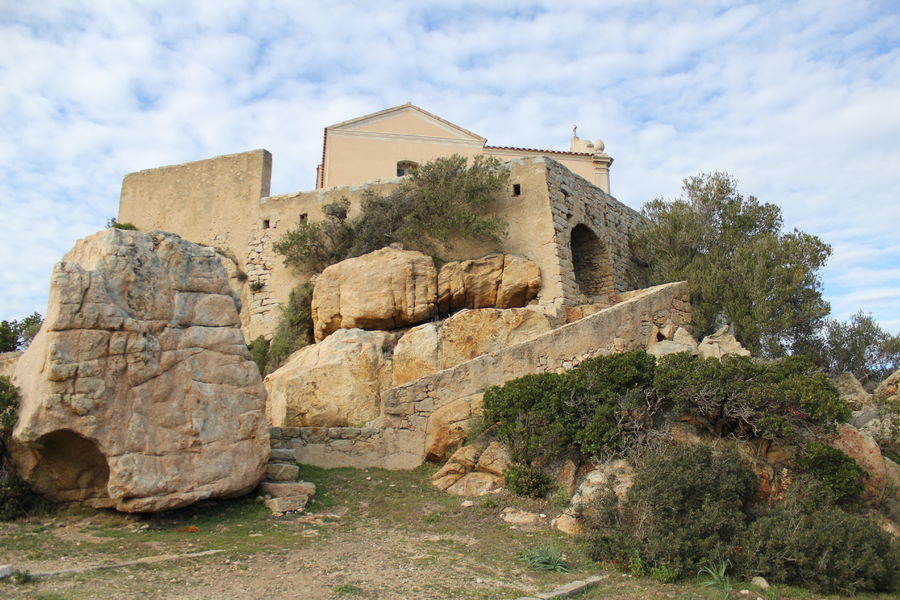
Notre Dame de la Serra... for the best panoramic views over Calvi Bay, the town and the citadel. Photographers and movie makers, this is the place for you!A little history...
Among the jewels of the cultural heritage, we can see on the hill a chapel and a sculpture attached to the rock.
It is the chapel of Our Lady of the Serra, built in the 15th century (1479), which is part of the Calvarian religious heritage. The sculpture represents the Virgin Mary, who was entrusted by the people of Calvados with the protection of the city and has been the object of a pilgrimage for 500 years.
The celebration of Our Lady of the Serra takes place every year in early September.
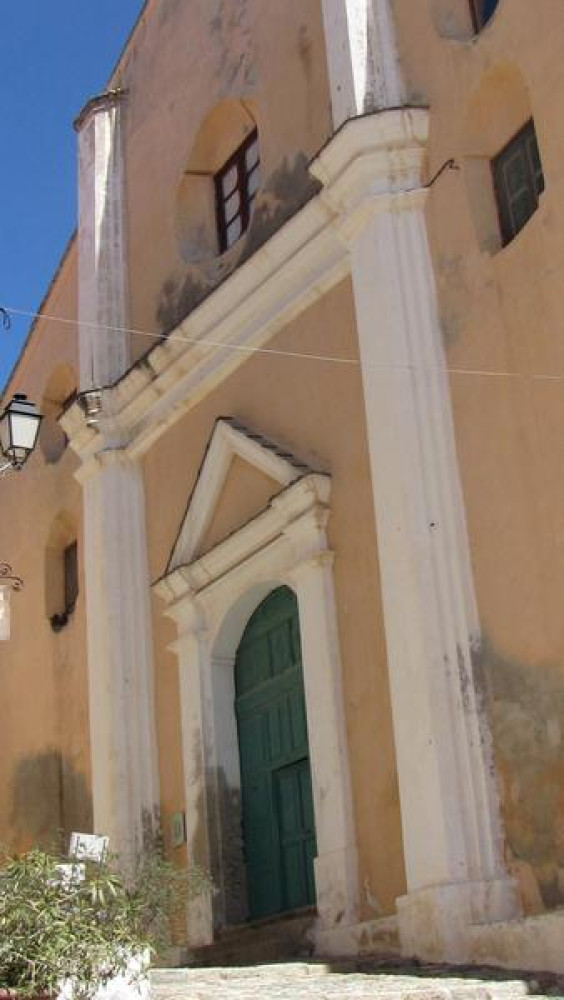
A superb example of Corsica's Baroque architecture, dedicated to Saint John the Baptist A little history ...
Founded at the end of the 13th century, it was destroyed and enlarged several times until the 18th century, hence its plan centered in a Greek cross covered by an octagonal dome.
Dedicated to St John the Baptist in 1528 and erected as a cathedral by Gregory XIII in 1576, it contains exceptional works: an altarpiece, signed Barbagelata, dated 1498, shows the Annunciation surrounded by saints and scenes from the life of the Virgin on the predella.
The high altar, in polychrome marble, in the very elegant vein of the Ligurian Renaissance, was donated by a Calvaise family in the 17th century.
To its left, the Rosary Altar, also in polychrome marble, houses a highly venerated processional statue: the Virgin of the Rosary, who came from Spain in the 16th century.
As a counterpart to it, a stucco lustro altar presents the Black Christ said of Miracles, in painted wood in Florentine style, enriched with a embossed silver perizonium, the strong popular devotion of which enabled the victory during the siege of 1555.
An important marble baptistery donated by Giovan Antonio Vincentello, in 1569, testifies to the enrichment of certain Calvais expatriates in the New World.
A gilded wood pulpit, dated 1757, completes this beautiful architectural testimony of Baroque art.
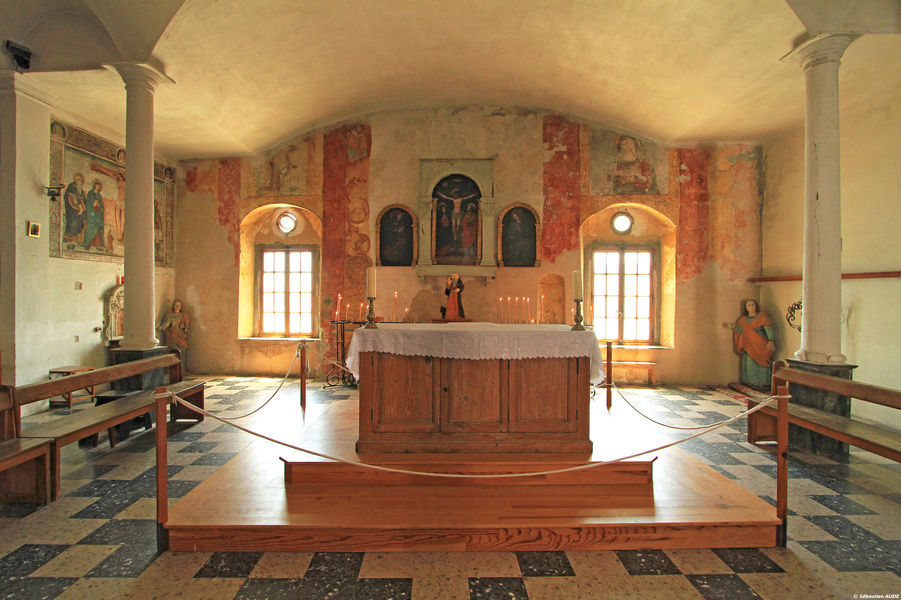
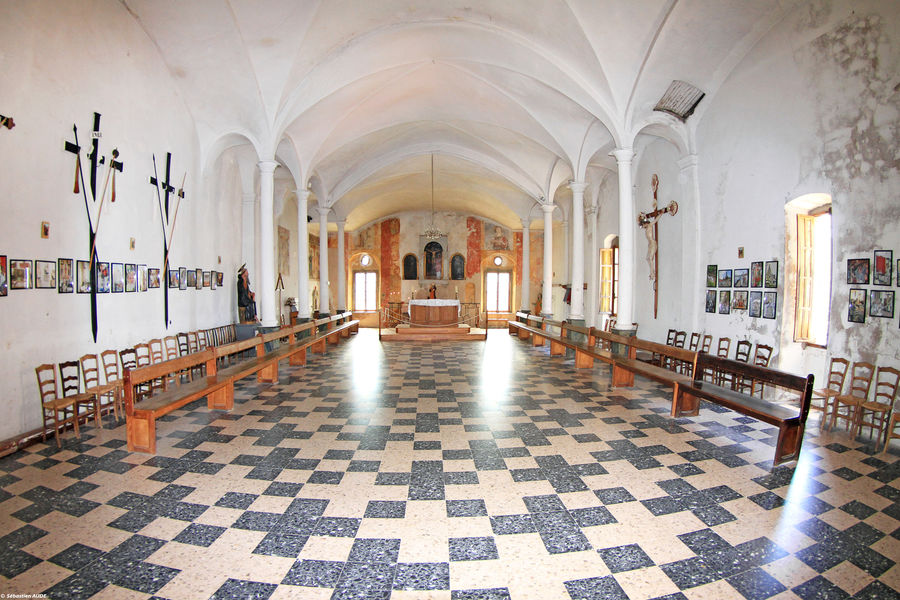
Chapel of the Friary of Saint Antoine Abbé, keeper of the traditions of Calvi...The Oratory...
It was built at the beginning of the 16th century, when Calvi was the seat of Genoese power in Corsica. Its interior architectural layout was strongly modified in the 19th century by the addition of
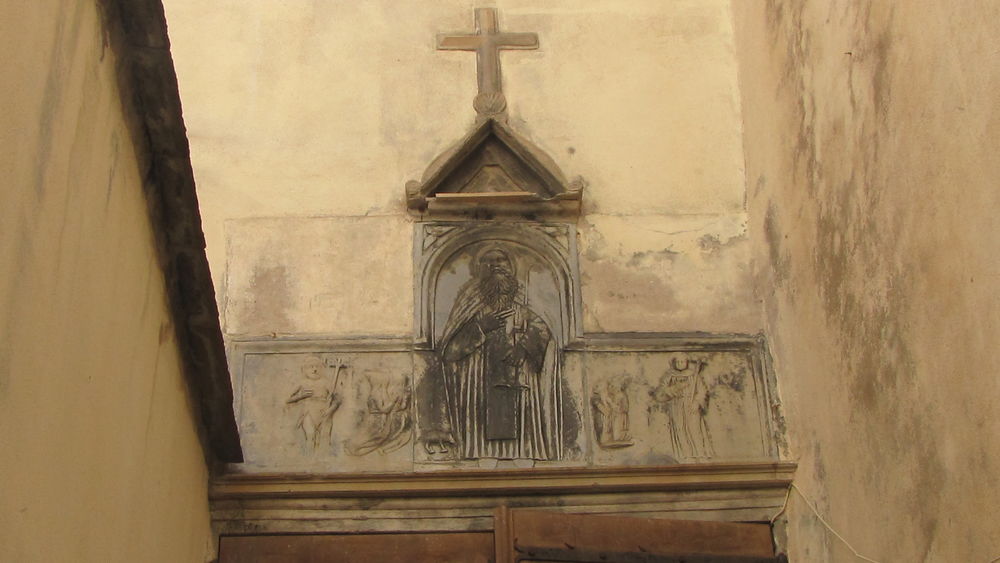
vaults. A 15th century slate "lavagna" (ornamental lintel) representing Saint Anthony welcomes the faithful.
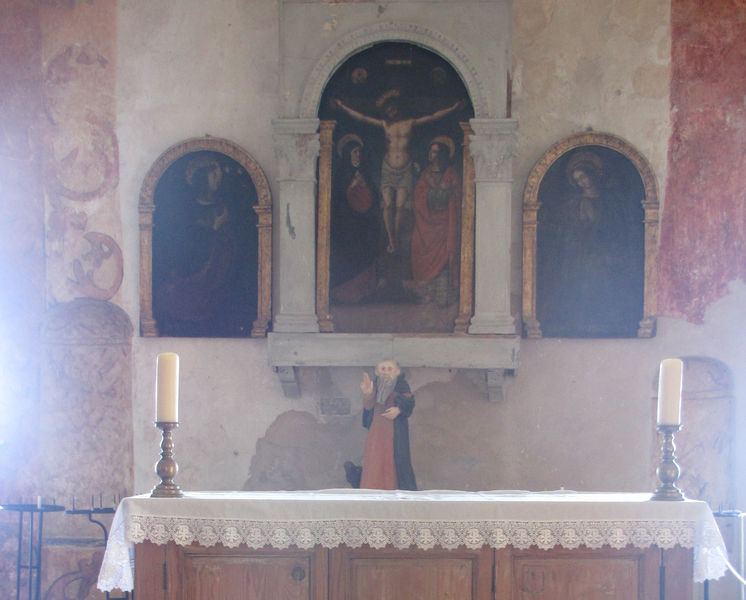
Two statues of the same saint have recently been placed in their historical context: a small Saint Anthony of Pisan manufacture dating from the end of the 14th century, which was probably the first processional statue of the brotherhood, and a second one in a seated position of Ligurian tradition and dated 1440.
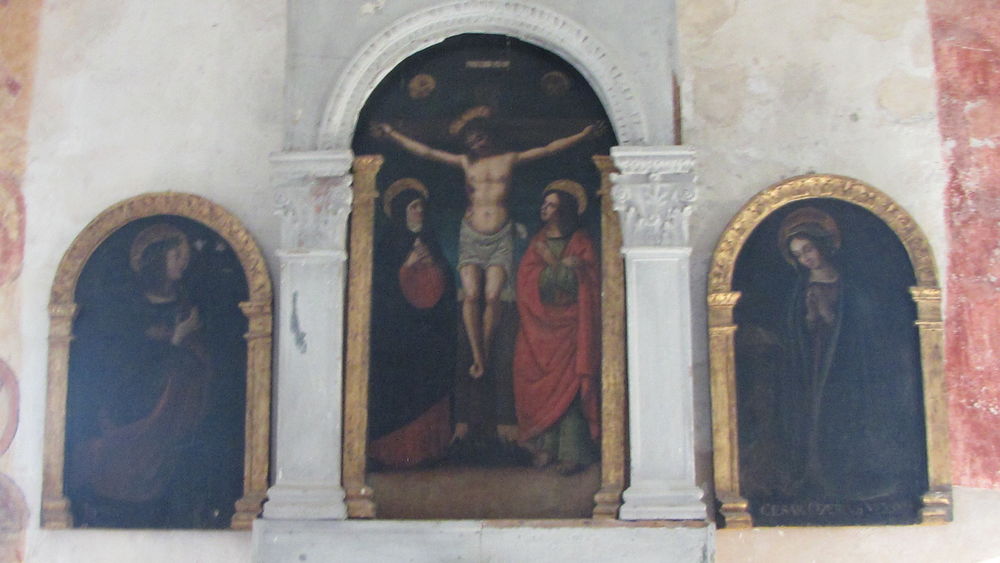
A very beautiful triptych painted on wood representing the Crucifixion, from the 15th century, as well as wall frescoes, notably a Crucifixion dated 1513, complete this beautiful ensemble.
The Brotherhood of Saint Anthony Abbot
The exact title of the brotherhood is Confraternity of Saint Anthony Abbot, of the Annunciation and of the Holy Stigmata of Saint Francis. The testimonies of the existence of this brotherhood go back to about the XIVth century. At the beginning of the XVI century, the brotherhood built a three-story building in the citadel, the oratory of Sant'Antone Abbate è Beata Nunziata, which is still today the chapel of the brotherhood.

An icon of incredible beauty!
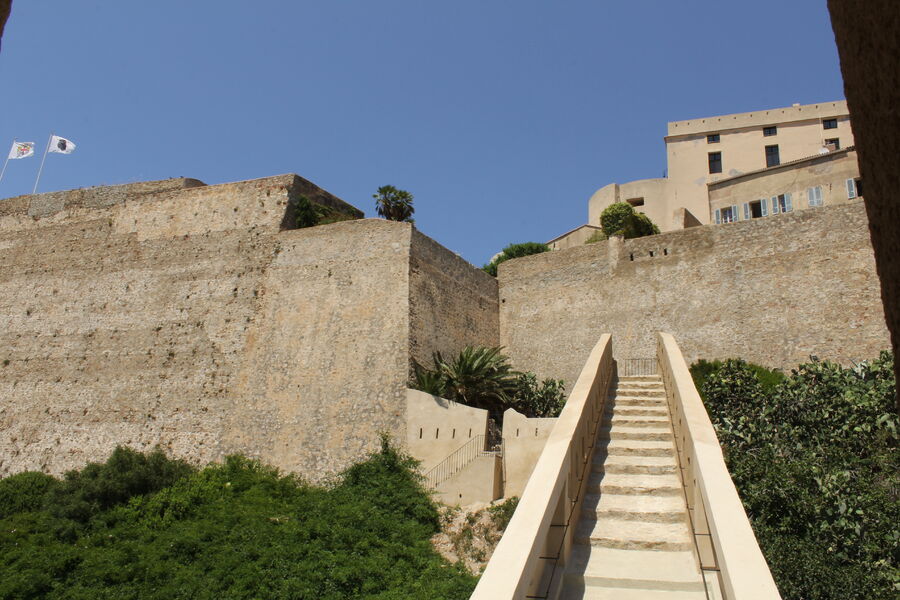
The Citadel of Calvi stands steadfast above the town, proudly displaying a whole wealth of history and heritage.
If you prefer to visit without a guide...
For adults... Calvi-Balagne Tourist Office has proposed audioguided tours of the Citadel for several years now. However, to keep up with the times, the old devices have been replaced by new-generation players that are very easy to use.
These are available in 4 languages - Français, English, Deutsch, Italiano - and come with a map showing the itinerary's 11 markers.
To add life and emotion to the story, the tour is accompanied by traditional music in line with the history of this Genoese fortress and the characters who helped make it famous (including Christopher Columbus, Admiral Nelson... and Laurent Giubega, Napoleon's godfather).
The system allows total freedom for users, who can even wander off into history along the cobblestones if they so choose.
For children... There's an audioguided tour in the form of a treasure hunt around the citadel, based on the use of an MP3 player.
Intended for children aged 7 to 14 years (alone or in groups), this tour is available all year round (during tourist office opening hours). The audioguide is available in French version only.It invites you to walk its cobbled streets and discover the universe in which Christopher Columbus was born.
There you will find the ruins of the house where he was born.
At the bend of a typical small shop, you will see Saint Anthony's Oratory and the famous Saint John the Baptist Cathedral. The Citadel of Calvi naturally arises as an emblematic site of Balagne. The Calvi-Balagne Tourist Office offers audio guided tours as well as a Treasure Hunt for a fun discovery of the citadel, one of the most beautiful sites in Corsica.
Another look at the city!
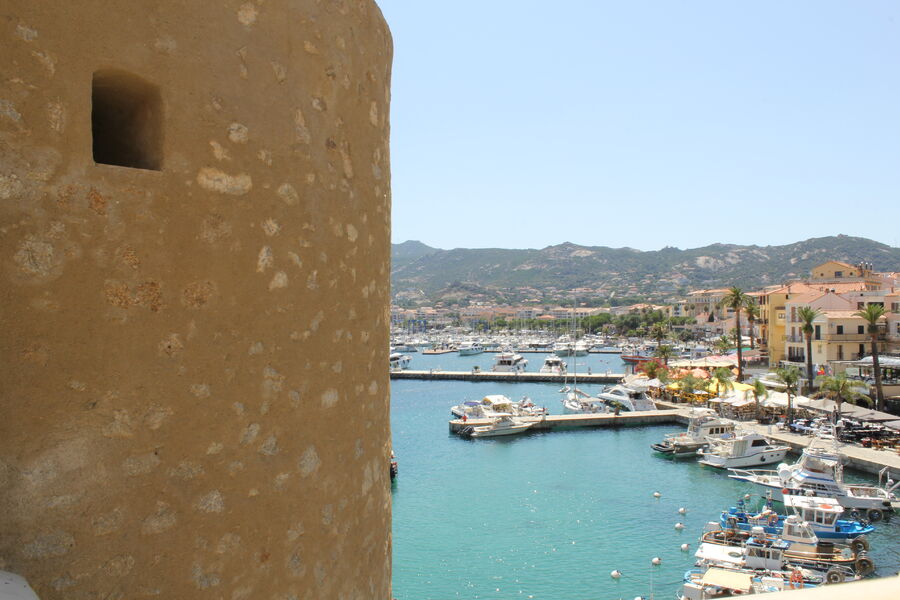
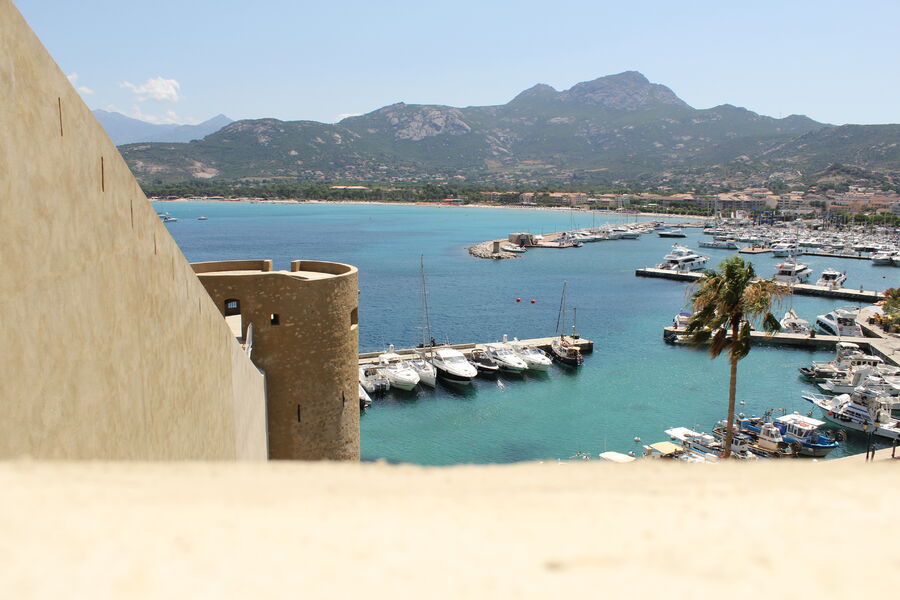
If the Citadel is also appreciated, it is also for its privileged geographical location. Perched on its rocky promontory, it offers a 360-degree panorama of the city, the marina, and the mountains that flow into the sea. Its cobbled streets and its typical "genovese" houses tell you their story in their own way. from the city.
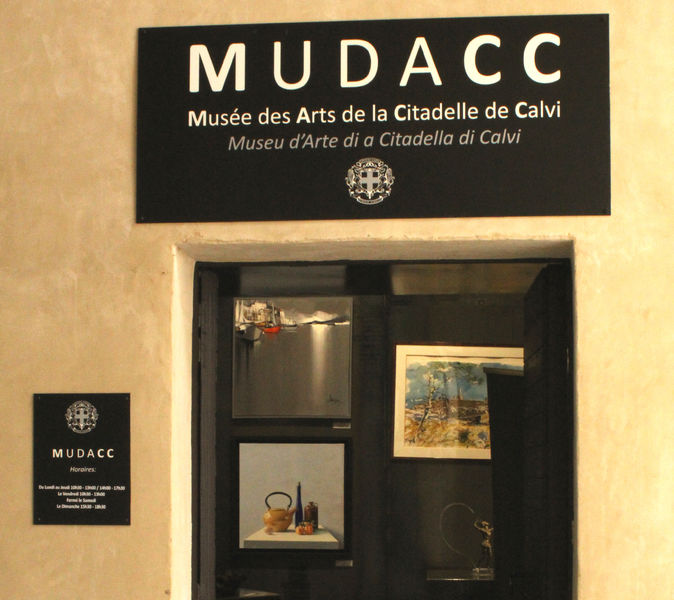
A short stop at MUDACC ...
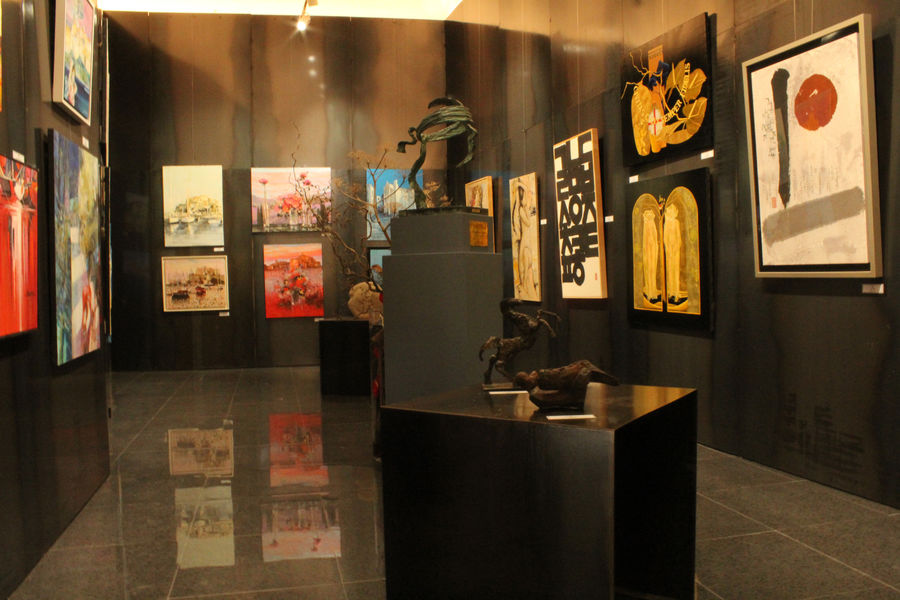
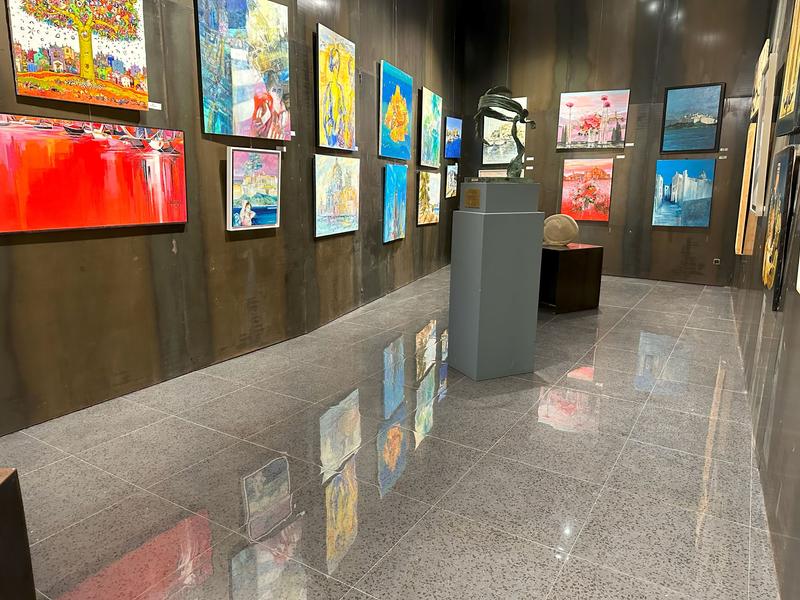
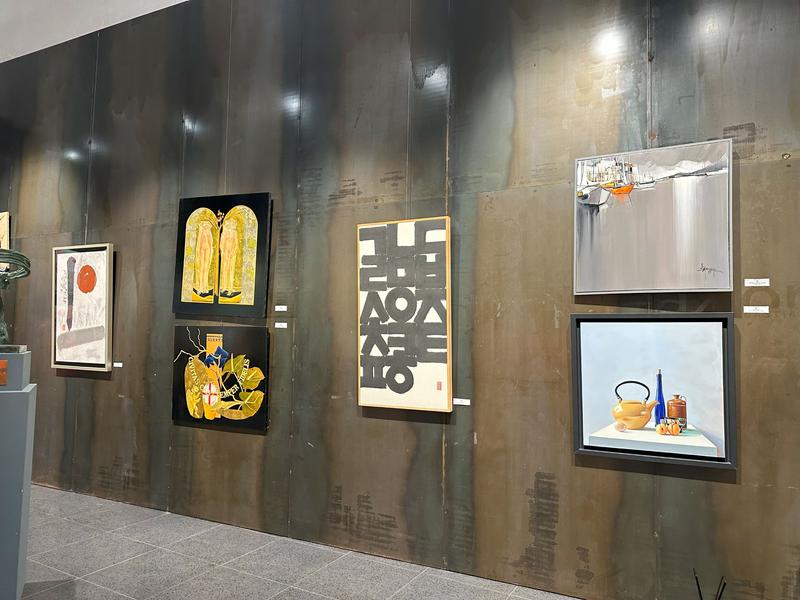
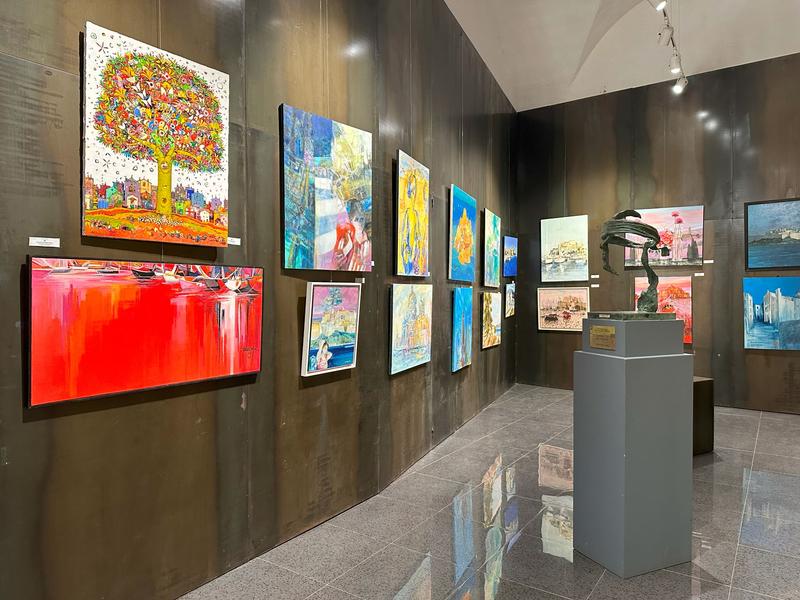
Under the entrance porch, you can now visit the Museum of Arts of the Citadel of Calvi. This brings together the works of the city's Contemporary Art Fund. The museum is open access.
To visit it in complete freedom ...
For adults ... The Calvi-Balagne Tourist Office has been offering an audio guided tour of the Citadel for several years now, but, modernism requires, the old players have been replaced by new generation players, very easy to use.
They are available in 4 languages ??- French – English - Deutsch - Italiano - and are accompanied by a map listing the 11 landmarks of the course.
Traditional music punctuates the visit and embellishes the history of this Genoese fortress and the characters who have contributed to its notoriety (Christopher Columbus, Admiral Nelson ... Laurent Giubega, Napoleon's godfather) and make the story alive and moving.
The system offers complete autonomy to the user, who, walking along the cobblestones of history, can also indulge in some stroll.
For children ... A treasure hunt consisting of an audio guided tour of the citadel in the form of a treasure hunt using an MP3 player.
It is intended for children aged 7 to 14 (individuals or groups) and is practiced all year round (during the opening hours of the tourist office).
Available in French only.
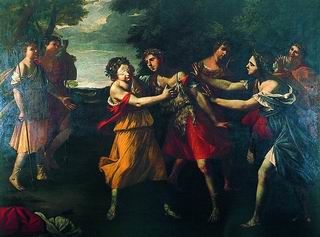
This layman's collection of works belonged to Cardinal Fech and can now be viewed by visitors to Calvi Town Hall The collection of Cardinal Fesch ... a permanent exhibition at the Town Hall of Calvi
The works of early Italian painters housed in the museum of the same name in Ajaccio, along with those in the Louvre and the Petit Palais, constitute the most representative collection in France. Cardinal Fesch’s life and work as a collector have many facets that overlap with the complexity of a society undergoing profound change at the end of the 18th century and the beginning of the 19th century. Sometimes a craftsman, sometimes an opponent of Napoleonic policy, an actor in the religious reconstruction of France, his career is modeled on that of his illustrious nephew. Art lover and bulimic collector, he built an extraordinary collection in an extraordinary social context. From 1827 to 1837, he had the palace built in Ajaccio which now houses the museum and the municipal library. He wanted to found a higher institute of the arts which did not see the light of day but of which there remains a museum, rich in a legacy of 1,200 paintings that the cardinal took from his collection. The collection of Italian primitives is undoubtedly, along with that of the Louvre and that of the Petit-Palais in Avignon, one of the richest and most representative that can be seen in France. At his death, his collection was to enrich in part this institute dedicated to the intellectual and artistic training of Corsican youth; the rest, made up of the most precious works, went to his eldest son, Joseph Napoleon Bonaparte, Comte de Survilliers. Thus the collection of paintings of Calvi, born from the desire of the Comte de Survilliers to extend his gifts to the various municipalities of the island, is obviously one of the endearing little sisters of the prestigious Ajaccian collection: 300 tables are taken? on the mass of the cardinal's paintings outside the great gallery. In Calvi are presented only secular works, works illustrating sacred facts being deposited in churches.
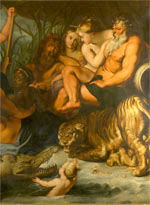
Zoom on the African continent, according to Pierre-Paul Rubens ...
Born in Wesphalia in 1577, where his parents lived in exile, he returned to Antwerp with his mother upon the death of his father. Trained and received as a master at the guild of Saint Luke, he left Antwerp in 1600, to return to the service of the Duke of Mantua. In Italy, he is both a painter and a diplomat. After completing a few missions, he hurriedly returned to Antwerp to his dying mother's bedside. In 1608 he was appointed court painter to Archduke Albert and Infanta Isabella. In the house he bought at the time, he experienced a regular and laborious life dedicated to his art. He resumed his diplomatic activity in 1625 which led to his being knighted by both the King of Spain and the King of England. Widowed in 1626 by his first wife, Isabelle Brant, he married Hélène Fourment for a second time, with whom he had five children and with whom he lived happily until 1640. After his return from Italy, Rubens imposed his powerful style on the Antwerp school. Endowed with a fertile and original imagination, he demonstrates an innovative daring in the dynamism and firmness of his bodies, which however remain full of harmony and elegance. His art, which reached maturity around 1620, expresses liveliness and spontaneity, both in large compositions and more intimate portraits. His subjects are varied, from the most dramatic religious scenes, to the most instinctive secular works, which pay homage to the healthy life close to nature that he loves. Strongly marked by the breadth of Italianate compositions, he revolutionized the meticulous and refined style of the North by introducing the energy of color and the brilliance of execution. Characterized by the movement of life in perpetual upheaval, his compositions give pride of place to the luminosity in which idealized, heroic and sensual human types evolve.
"The African Continent"
Exhibited at the Hôtel de Ville in Calvi and donated by the Comte de Survilliers, this work, donated for an 18th century copy, is the allegorical representation of the four parts of the world kept at the Kunsthistorisches Museum in Vienna. Dated between 1612 and 1615, this painting is significant of the period of Rubens' career when mythological and allegorical representations prevail in his work alongside religious scenes. Here, in his interpretation of the world, Rubens organizes his allegorical figures in a circular movement that the play of looks emphasizes. Top left, he portrays the Danube as a male figure leaning toward the allegory of Europe. Below, Rubens situates the Nile embracing the black continent of Africa, whose face turns to the viewer. To their right, the American continent, arms resting on the Amazon River, leans towards the couple formed by the Indian continent and the Ganges.
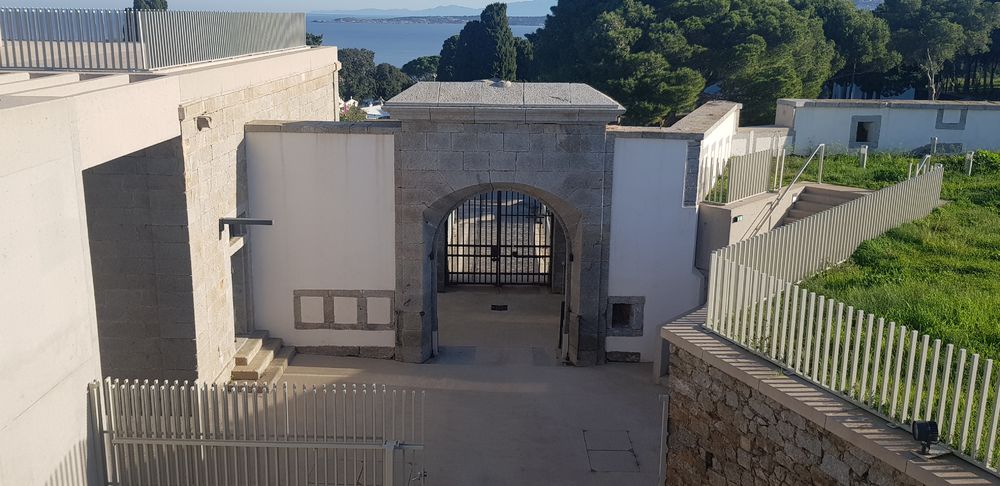
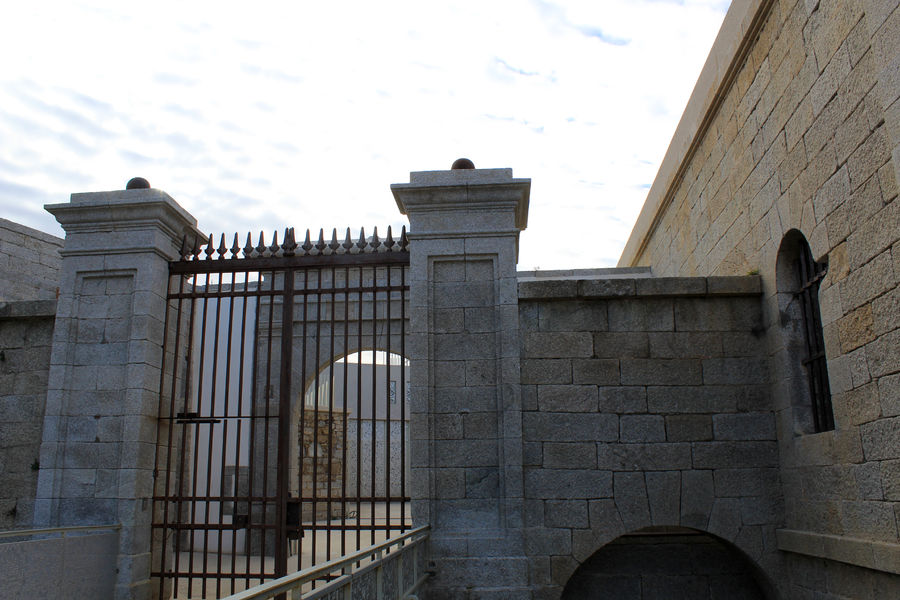
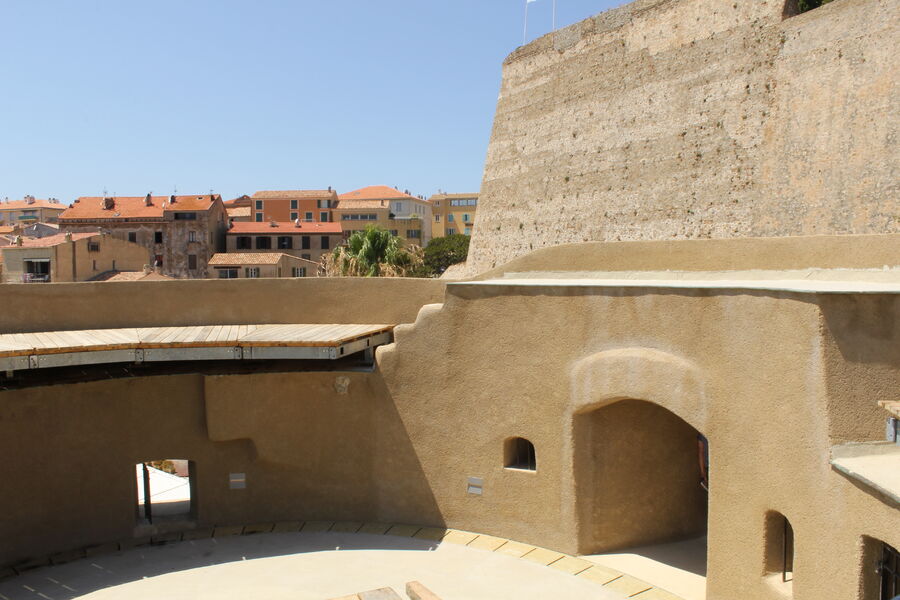
Completed in 1845, this ancient military fort was built to the plans of Esmenard, the Military Engineers Captain.It was originally designed to accommodate soldiers and ensure a defensive role. It will finally become a prison at the beginning of the 20th century; many opponents of the French colonies will notably be imprisoned there.
It also served, like its neighbor Fort Muzzellu, as a disciplinary quarter for the marine infantry.
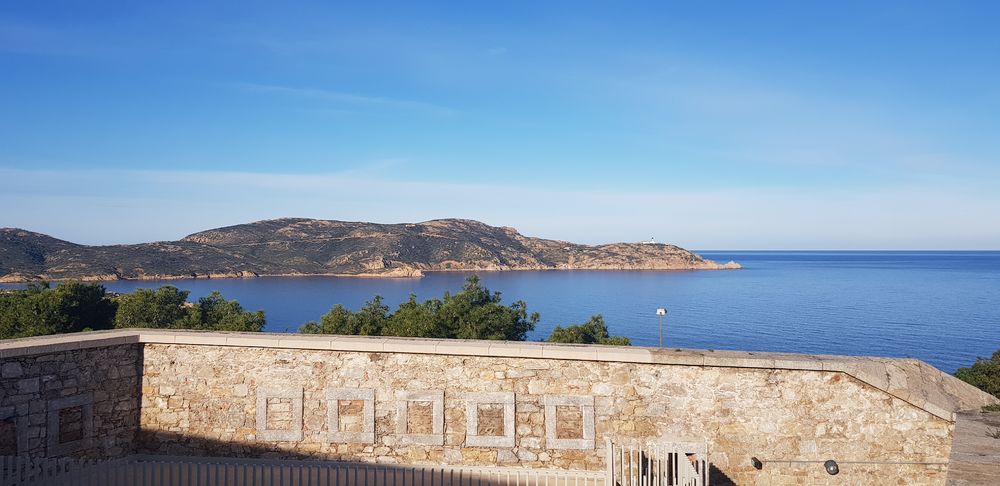
It now houses the Center for the Conservation and Restoration of Corsican Movable Heritage. Open to the public one day a week, you can admire the heritage it contains and enjoy the panoramic view offered from the landscaped and vegetated esplanade. Temporary exhibitions are organized there.
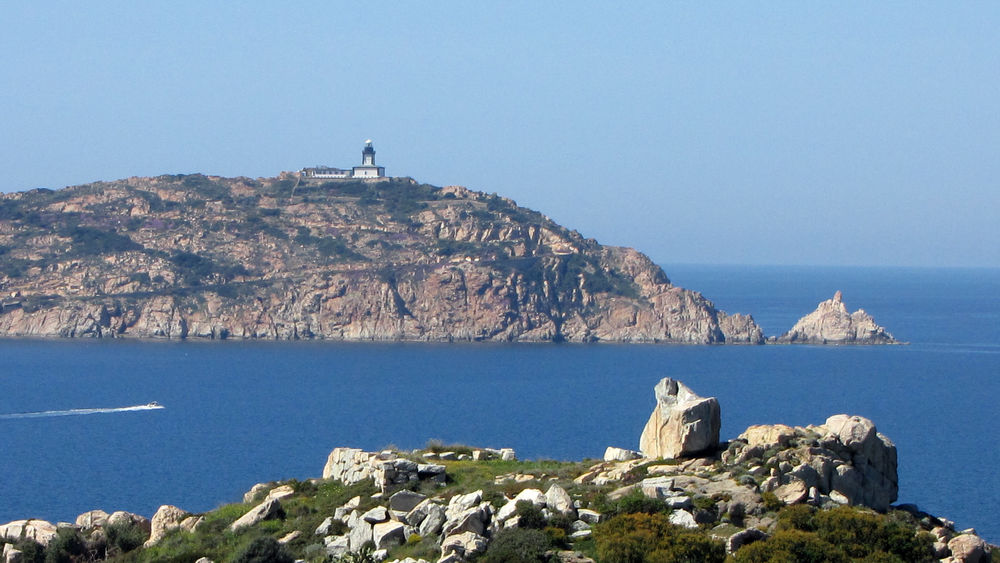
Ruins of the old observant convent San Francescu Vechju founded in 1236 by a disciple of Saint Francis. Completed around 1257, he owned a navy at a place called Roncu and occupied the whole of the point. It will be ruined by the siege of Calvi in ??1554.Only a few stones remain today, but the site offers a magnificent view of the sea, the Revellata, the Citadel and the Roncu.
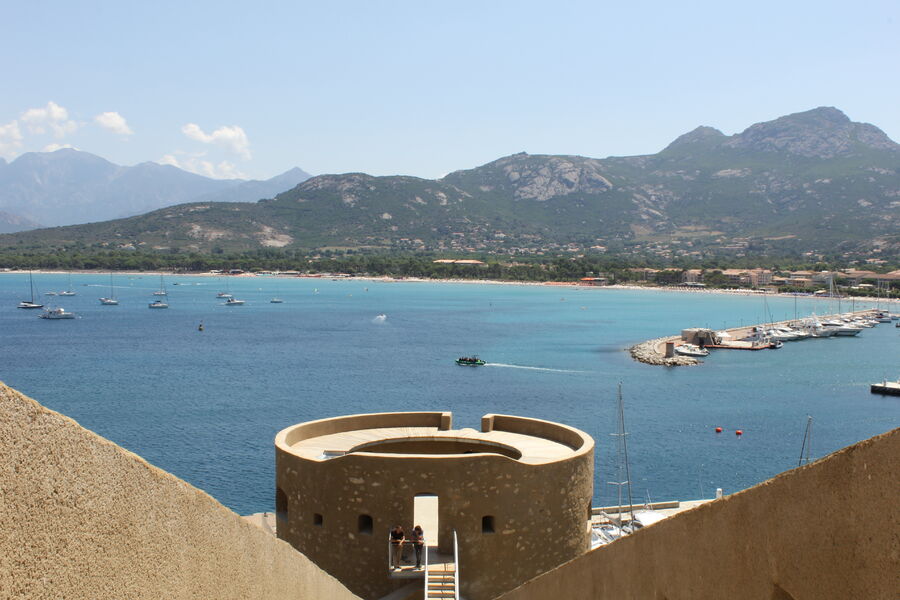
The city of Calvi invites you to discover the restored Tour de Sel and the Caponnière. Built in 1495, it served as a lookout post and warehouse for salt. It was attached to the citadel in 1934 and classified as a Historic Monument in 1992.It now hosts exhibitions.
 Lisula - Outdoor & Trail - Trace - Hiking 28 : Revellata